Colombia as a future gastronomic tourism powerhouse [Part 2]
15 September 2022
A bunch of coffee beans are growing on a tree branch

Last week we discussed the progress Colombia has made in recent years in the gastronomic tourism industry. Today we dig a little deeper to learn about some of the elements that make up this culinary landscape.

To illustrate the first case, according to the National Federation of Coffee Growers, 22 of Colombia’s 32 departments are coffee producers. This in terms of gastronomic tourism can represent an opportunity for decentralization of tourism for less visited territories to the main cities such as Cartagena, Santa Marta, Medellin, Bogota or Cali. Coffee cultivation represents 25% of agricultural employment in the country, which translates into some 730,000 direct jobs. These figures could be much higher if we begin to look at the sector as a tourist resource that allows the coffee growing populations to stay in their territories and dedicate themselves to the work that they know how to do, generating new social dynamics and income from the creation of the coffee tourism offering.

The Colombian Coffee Cultural Landscape is a UNESCO Cultural Heritage since 2011. In Quindío, one of the main departments of the Coffee Axis, there are 7 theme parks, some specialized in this beverage and its production; there are also different tourist coffee farms, routes focused on panela and coffee, some 200 specialized gastronomic stores and 26,000 beds available for visitors according to the Chamber of Commerce of Armenia. While it is true that a more accurate measurement of the supply of tourism products focused on coffee is missing, it is possible to assert the enormous potential of gastronomic tourism that the zone represents, above all due to the worldwide popularity of this beverage.

On the other hand, if we talk about a product such as cacao, the horizons expand towards more opportunities. Colombian cacao has won different international recognitions, one of them by the Salon du Chocolat de Paris in its 2021 version. This fruit is also grown in different Colombian departments such as Arauca, Chocó, Antioquia, Nariño, Huila, Tolima and Santander. This also offers the possibility of creating special routes, experiences, lodging, gastronomic stores, tastings, etc., focused on this product. Although there is currently an existing offer, the same is true as with coffee: more figures, measurements, organization and promotion are needed. Moreover, the National Federation of Cocoa Growers announced that in 2021 it reached a record figure in production of this fruit with 69,040 tons, which indicates that the industry as such is also growing. The potential exists and we must take advantage of it as soon as possible.

Now, if we move on to fruits, Colombia is the ninth largest supplier of exotic fruits worldwide. This can be illustrated in terms of gastronomic tourism by searching the words “fruit tour Colombia” and marveling at the number of results that search engines throw up. Important gastronomic markets such as Paloquemao in Bogota or the Plaza Minorista in Medellin have become the scene of fruit tastings that amaze visitors precisely because of the country’s biodiversity. These are interesting dynamics as they expand the activities and income of markets that have been strictly limited to the commercialization of foodstuffs for years and that find in tourism a new opportunity. It is important to make it clear once again that there are still no official figures for these activities, and they are really necessary to measure and consolidate a gastronomic tourism sector in Colombia.

If we focus on a product such as the arepa, an ancestral corn-based mix with different variations, we are faced with a preparation that is easy to replicate and adapt to everyone. According to Colombian chef Carlos Gaviria Arbeláez, author of the book Colombian Arepas: Professional Cooking Techniques, there are about 70 types of arepas, not counting variations from other countries such as Venezuela. This preparation responds to a transversality referring to different times of the day, socioeconomic level, tastes and diets that give it a lot of potential in terms of gastronomic tourism. Likewise, its variations lend themselves to involve different regions of the country, create arepa routes, talk about identity, culture and national history and transport it to other international environments.

Finally, although it is clear that gastronomic tourism goes far beyond the restaurant sector, we know that it is an important part of the tourist heritage of a region. In these terms, Colombia’s gastronomic progress can be reasserted if we take into account lists such as The World’s 50 Best 2021, which listed the 100 best restaurants in Latin America, of which ten are Colombian restaurants. Names such as Leonor Espinoza, Harry Sasson, Juan Manuel Barrientos or Álvaro Clavijo are increasingly resonating on the world gastronomic scene, and although they are not within everyone’s reach, they undoubtedly contribute to the shaping and positioning of Colombia as a gastronomic tourism destination.

The figures, the scenario and the projections are positive. The potential, the manpower and the ideas are latent. Undoubtedly it is necessary to formalize the sector, to have more public investment, tourism infrastructure, offer of private entities and much more, but the words of Juliana Duque resonate again, Colombia is in the gluttonous eyes of the planet.
Promotion for culinary capitals an innovative destination certification and development program for unknown destinations
Taste of place podcast listen to our culinary travel and culture podcast with erik wolf
Food
A membership page with a picture of pancakes on a plate.
5 January 2026
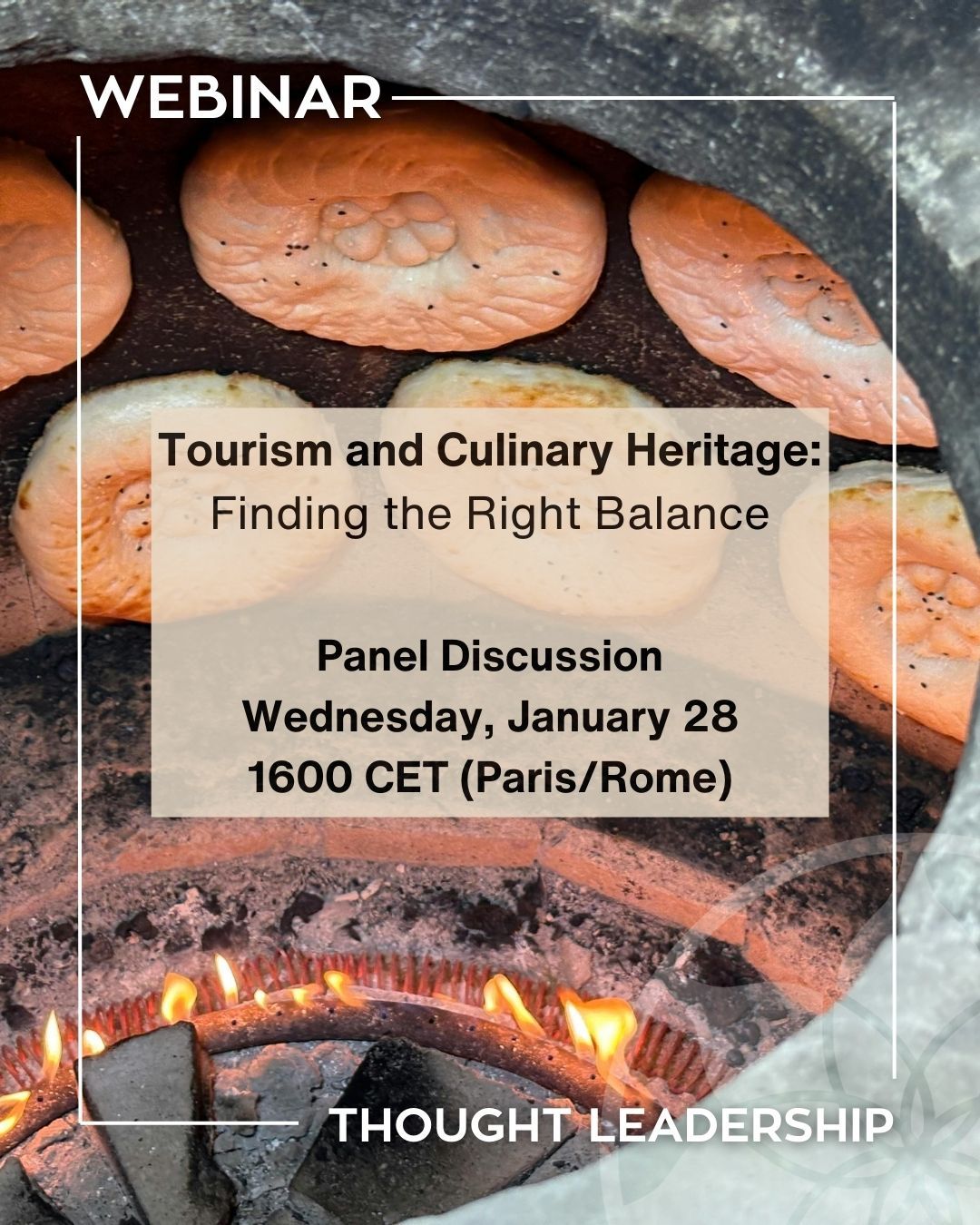
As interest in local food cultures continues to grow, destinations face increasingly complex choices. Tourism can support culinary heritage by strengthening local economies and raising awareness of food traditions. At the same time, poorly managed promotion can simplify, commodify, or distort cultural practices. This webinar brings together perspectives from across the system to examine how tourism and culinary heritage can coexist more responsibly. Panelists: - Janice Ruddock, Executive Director, Ontario Craft Brewers Association - Sean O’Rourke, President, Eat & Walkabout Tours - Niclas Fjellström, Executive Director, Culinary Heritage Network - Erik Wolf, Executive Director, World Food Travel Association The discussion will be moderated by Marc Checkley, a Lausanne-based storyteller, journalist, and experienced event host with a background in food, wine, travel, and cultural programming. Topics include: Recognizing culinary heritage as living culture rather than a static product Understanding how tourism and markets influence tradition over time Identifying where destinations most often struggle to find balance Applying practical principles for responsible promotion and stewardship This session is relevant for destination marketers, tourism offices, policymakers, producer associations, educators, and anyone working at the intersection of food, culture, and place. There is no cost to attend. REGISTER NOW
2 January 2026
🎧 New Podcast Episode Alert! Episode 83: “Why Artisanal Still Matters” featuring Heike Winter What happens when you completely reinvent your life at 50—and return to the culinary traditions that shaped you? In Episode 82, host Erik Wolf speaks with Daniela Sfara, the Canadian-Italian chef, cultural ambassador, and founder of ITALUS whose mission is to preserve the disappearing regional foodways of Italy. Daniela shares her extraordinary personal transformation from a 20-year jewellery career to becoming a respected voice in culinary culture, hospitality excellence, and immersive food experiences across Italy, Dubai, Europe, and North America. Daniela’s story is one of resilience, reinvention, and deep cultural stewardship. Whether you work in food, tourism, hospitality, or simply love Italian cuisine, this is an inspiring reminder that food is identity, and preserving culinary heritage is an act of service to future generations. 🎙️ Available now on Spotify, iTunes & your favorite podcast platforms (Search for "Taste of Place") 📺 Prefer video? Watch it now on our YouTube channel. Or listen here now:
14 December 2025
🎧 New Podcast Episode Alert! Episode 82: “Cooking by Heart, Not by Recipe” featuring Daniela Sfara What happens when you completely reinvent your life at 50—and return to the culinary traditions that shaped you? In Episode 82, host Erik Wolf speaks with Daniela Sfara, the Canadian-Italian chef, cultural ambassador, and founder of ITALUS whose mission is to preserve the disappearing regional foodways of Italy. Daniela shares her extraordinary personal transformation from a 20-year jewellery career to becoming a respected voice in culinary culture, hospitality excellence, and immersive food experiences across Italy, Dubai, Europe, and North America. Daniela’s story is one of resilience, reinvention, and deep cultural stewardship. Whether you work in food, tourism, hospitality, or simply love Italian cuisine, this is an inspiring reminder that food is identity, and preserving culinary heritage is an act of service to future generations. 🎙️ Available now on Spotify, iTunes & your favorite podcast platforms (Search for "Taste of Place") 📺 Prefer video? Watch it now on our YouTube channel. Or listen here now:
21 November 2025
Born in Las Raíces, San Juan del Cesar, Colombia, Mabel Esther Vega Montaño honors with her life the name of the place where she was born. A rural teacher and guardian of traditions, she combines formal education with the transmission of ancestral knowledge about respectful cultivation and harvesting of the land. Through fique weaving, she connects communities and promotes rural tourism intertwined with local gastronomy, where the wooden pestle, the totumo achiotero, and the wood-fired stove accompany the preparation of traditional dishes that celebrate the living memory and deep roots of the territory to which she has devoted her life. Learn more about our new Taste of Place Movement and how you can support it and the work done by Mabel and others like her.
12 November 2025
🎧 New Podcast Episode Alert! Episode 81: “The Sweet Taste of Ethics” featuring Veronica Peralta In this inspiring episode, Erik Wolf sits down with Veronica Peralta of Paccari Chocolate — the Ecuadorian brand that redefined how ethical, organic, and biodynamic chocolate can uplift entire farming communities. Veronica shares how her brother Santiago transformed Ecuador’s cacao industry by empowering small farmers, protecting biodiversity, and restoring national pride in fine-flavor cacao. The conversation explores the distinct regional flavors of Ecuadorian chocolate, the social and environmental mission behind Paccari, and how climate change is reshaping the global cacao market. Veronica also discusses Paccari’s recognition as the world’s most ethical chocolate brand, and why conscious consumer choices can create real change. 🎙️ Available now on Spotify, iTunes & your favorite podcast platforms (Search for "Taste of Place") 📺 Prefer video? Watch it now on our YouTube channel. Or listen here now:
30 September 2025
In Loving Memory and with Deep Gratitude: Honoring Brian F. Lorge
More posts