How to Make Your Gastronomy Business More Planet-Friendly
30 November 2020
Stem & Glory

By Louise Palmer Masterton, Founder & Chef, Stem & Glory

Recently, I went to the premiere of David Attenborough’s new film ‘A Life on our Planet’.*

Described as his ‘witness statement’, the film contained a plethora of compelling statistics that defined the devastating problems we face if we do not stop destroying our planet. The film shows the numbers for the rapid increase in global population, the increase in carbon in the atmosphere, and the accompanying sharp decrease in unfarmed natural land.

It is a stark message. By losing the biodiversity of our land, we are fast accelerating towards extinction as our planet struggles with the excess demands placed upon it. The earth has finite commodities, but we are acting like they are limitless.

The film does however end with a ray of hope. Attenborough lays out the steps we need to take to quickly redress the balance and allow the planet to recover.

These steps are simpler than you might think.

  1. Population control – end poverty and increase access to education for all people, which will naturally lead to population control. This, of course, requires global commitment.
  1. Rewild the rainforests to restore biodiversity. Rewild more farmland.
  1. Stop eating meat. For every one carnivore in nature there are at least 100 prey animals, so for 11 billion humans to be carnivores is completely unsustainable. It’s an absolute no brainer.
  1. Abandon fossil fuel in favour of renewable energy. Everyone knows this, but with pension funds and big business still investing in fossil fuels there is a substantial way to go.
  1. Land use. Using less land in more intelligent ways to produce more food, such as vertical and urban farming.
  1. Stop Waste. Period.

So how can tourism and gastronomy businesses play their part?

You might think that most of this list is beyond the sphere of influence of an individual or an individual business, with international action and financial incentives needed for this to happen on a global scale.

Whilst it’s true that international action is needed, we can all instigate actions that make a difference. Some of these involve supporting non-profits in a financial sense, but many of the actions we can take are changes within our own supply chains which are not disruptive or costly. They simply involve making more ethical choices in our purchasing decisions.

A recent Futerra survey showed that 88% of consumers want brands to help them be more sustainable, and many people utilise their purchasing power as a way to make their mark, so it’s also a shrewd business decision to make positive changes within our own businesses.

  • Education
    Consider donating a small part of your income. Attenborough states that to achieve the eradication of poverty, education, particularly of women, plays a huge part. Camfed, a charity directly impacting the education of women is one such example of an organisation working towards this aim.
  • Rewilding
    Work with the many new ethical suppliers who are themselves making a difference. For example, we work with a tea supplier called Reforest Tea. For one 500g bag of breakfast tea, costing £12, they are able to plant 6-8 trees. Perform your own sustainability audit (there are also individuals and organisations that can conduct this for you, or you could simply do it yourself). For example, it’s now widely known that palm oil is one of the main reasons that the rainforest has been destroyed, so eradicating it in your home, business and supply chain is one way of making an impact.
  • More Plant-based meals
    Obviously as a vegan brand we are hoping that the whole world will eventually refrain from eating meat. But even if you are not vegan, the fact that 65% of all the mammals on this planet are farm animals, their devastating carbon impact and land use cannot be overstated.

It’s simply not sustainable for the 11 billion animals on the planet to eat other animals. But what does this mean for a food business that serves meat? And what if your offering is purely meat-based, like a steakhouse? Fortunately/unfortunately it means you need to pivot your business model. Although it might feel like your offering is well supported now, it will become increasingly regarded as unethical in the future.

I am not lecturing here, but don’t count on people wanting to continue eating meat in the future as they do now. So now is the time to explore plant-based options that suit your brand and develop new products that have a lesser carbon impact. Stem & Glory is working on a pilot project with a new business that does carbon labelling for menu items. It may take a while for this to take on, but we predict this will be in huge demand in the future by consumers.

  • Using Renewable Energy
    In pursuit of renewable energy, hospitality businesses can make a huge impact by simply moving to renewable only energy sources. There are a number of these now, including the most established Ecotricity and Green Energy. But we can go one step further. Who are your investors? What are their green credentials? Do they invest in fossil fuels? Who are your partners? Who are your landlords? Scrutinise everything. Ask questions. Take every opportunity you can to bring attention to this.
  • Vertical Farming
    I visited Amsterdam in February, in those heady days before Covid-19. There are some super-exciting projects there with vertical and urban farms. They are a big exporter of vegetables because of this. They get greater output from a much smaller footprint in this way. It’s now also breaking into the hospitality sector. I visited a restaurant called Juniper & Kin which is on the top floor of a tall hotel building. They have a greenhouse on their roof and grow a high percentage of their produce there. There are a number of similar operators in the UK and it’s a hugely exciting space to be involved with. We are in discussion with our landlords about making this happen at our existing and all future sites.
  • Waste . Probably the biggest issue of all.

Food Waste
More than one-third of all food produced is wasted. And with regard to fruit and vegetables, it is almost half. In the developing world, this waste is largely down to inefficient processing, poor storage, and insufficient infrastructure. In medium and high-income countries, whilst supply chains can still be an issue, the behaviour of consumers plays a much greater part. We are simply buying it and not eating it. Much of this food waste could be avoided if it were managed better. The hard fact is, if we managed to reduce the amount of food waste down by just 25%, that would be enough food to feed the 870 million who currently do not have enough to eat.

Packaging Waste
There is a huge amount of misinformation out there on this subject, especially with regards to single-use. I watched a short film recently, called ‘Our Planet, Our Business’, and one of the experts said, ‘there is no such thing as waste, it’s just a commodity in the wrong place at the wrong time’. That really struck me. Packaging is a complicated subject that we’ve been immersed in researching for some time, and here is what we have learned:

  • The only truly sustainable, circular solution for packaging is to use products that are made from 100% recycled post-consumer waste, which is then endlessly recycled. So, we are no longer using single-use anything.
  • Compostable is not the answer to the issue of single-use, as compostable containers are widely made from virgin materials, which increase the carbon footprint of the product, and do nothing to solve the issue of mass disposability.
  • When the world is truly plastic-free, then it may be that recycled packaging which is also compostable could play a part. But, whilst we have such huge amounts of post-consumer plastic waste, the most responsible thing we can do is recycle it. If the demand for 100% recycled plastic were greater, demand would also increase for manufacturers to buy post-consumer waste plastic. And so it goes on.
  • Of course, responsible use of recycled plastic products requires education, and we need to invest energy into just that. It’s a big step for us all to make in our heads because plastic has been vilified for so long, but research shows it’s moving away from single-use anything that has the greatest carbon impact. The leap we all need to make is to start viewing plastic (and everything else on this planet) as a valuable commodity.

Other Waste
At Stem & Glory, we are currently fitting out a new site in Cambridge. The driver behind our decor is reuse and recycle as far as possible. It’s been great to see that there are so many new products on the market that are composed of recycled post-consumer waste. We predict that this will explode massively in the coming months and years. From table-tops to worktops, paint, flooring, concrete, lights, innovation is everywhere. And it looks completely fab! As part of this process we have also been able to get our entire team on board – from designers to contractors, all are now also committed to the reuse and recycle way of living.

And this is probably the best way we can win hearts and minds to tackling climate change. Never underestimate the contribution that an individual or individual business can play. By changing ourselves we generate spirals of positive influence – the R number of sustainability! The more you make changes and tell others, the more people you will influence for good.

ABOUT THE AUTHOR

Louise Palmer-Masterton is the founder of multiple award-winning restaurants Stem & Glory; hip and trendy but accessible plant-based restaurants, serving delicious gourmet vegan food from locally sourced ingredients, 100% made on site. Stem & Glory also offers click-and-collect and local delivery in London and Cambridge.  Follow our crowdfunding work here.

Notes:

*David Attenborough: A Life On Our Planet – is available on Netflix, or you can preview the show here on YouTube.
Promotion for culinary capitals an innovative destination certification and development program for unknown destinations
Taste of place podcast listen to our culinary travel and culture podcast with erik wolf
Food
A membership page with a picture of pancakes on a plate.
11 January 2026
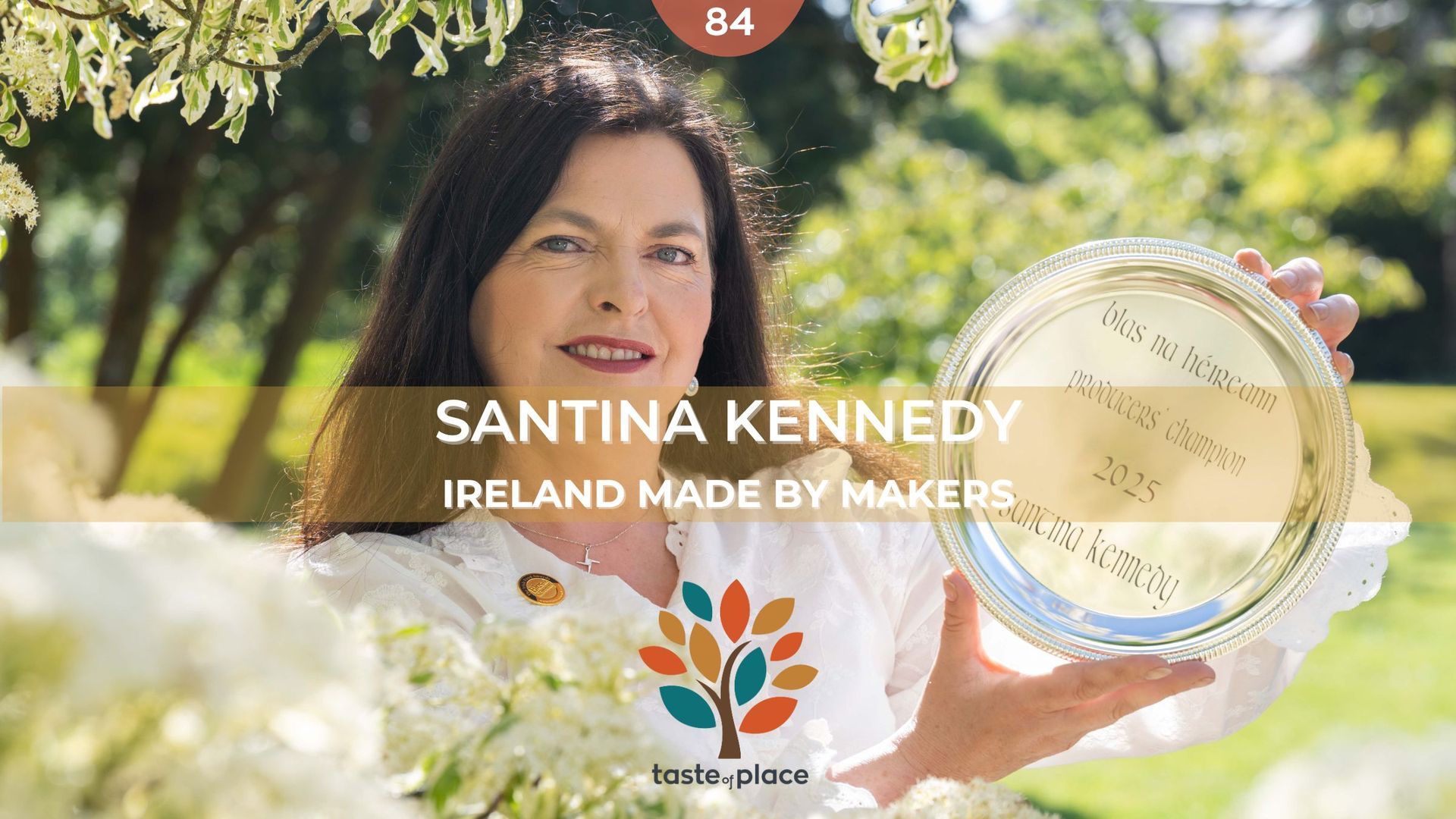
In this episode, Erik Wolf speaks with Santina Kennedy, an award-winning Irish food consultant, producer champion, and storyteller whose work bridges food history, culture, and contemporary experience design. Santina shares her unconventional journey from banking to café ownership, and ultimately to a vocation that did not exist when she was young: interpreting Irish food culture through storytelling, events, and strategic collaborations. She reflects candidly on delayed purpose, entrepreneurship without capital, and why genuine hospitality matters more than polish or scale. The conversation explores Ireland’s overlooked food narratives - from tenant farmers and kitchen workers to everyday staples like potatoes, butter, and bread - and how these stories can be brought to life through immersive experiences in galleries, estates, and public institutions. Santina also dives deeply into Irish whiskey, explaining how history, resilience, terroir, and innovation are expressed in mash bills, grains, and pairing traditions. A standout theme is Santina’s advocacy for St. Brigid as Ireland’s original food and hospitality patron, and her work elevating Brigid’s legacy through food, drink, poetry, and craft. The episode concludes with a thoughtful discussion on regional food networks, particularly County Wicklow, and why Ireland must first teach its own people to value their food culture before expecting visitors to understand it. This is a rich, reflective conversation about identity, resilience, and the power of food to tell the true story of a place. You can learn more about Santina here . The Taste of Place podcast is sponsored by the World Food Travel Association’s Taste of Place movement. Taste of Place is a global initiative that celebrates culinary culture, food heritage, and the makers behind them. Through the movement, travelers and consumers are encouraged to connect more deeply with destinations and products through their unique flavors and traditions. Learn more at JoinTasteofPlace.org . 🎙️ Available now on Spotify, iTunes & your favorite podcast platforms (Search for "Taste of Place") 📺 Prefer video? Watch it now on our YouTube channel . Or listen here now:
5 January 2026
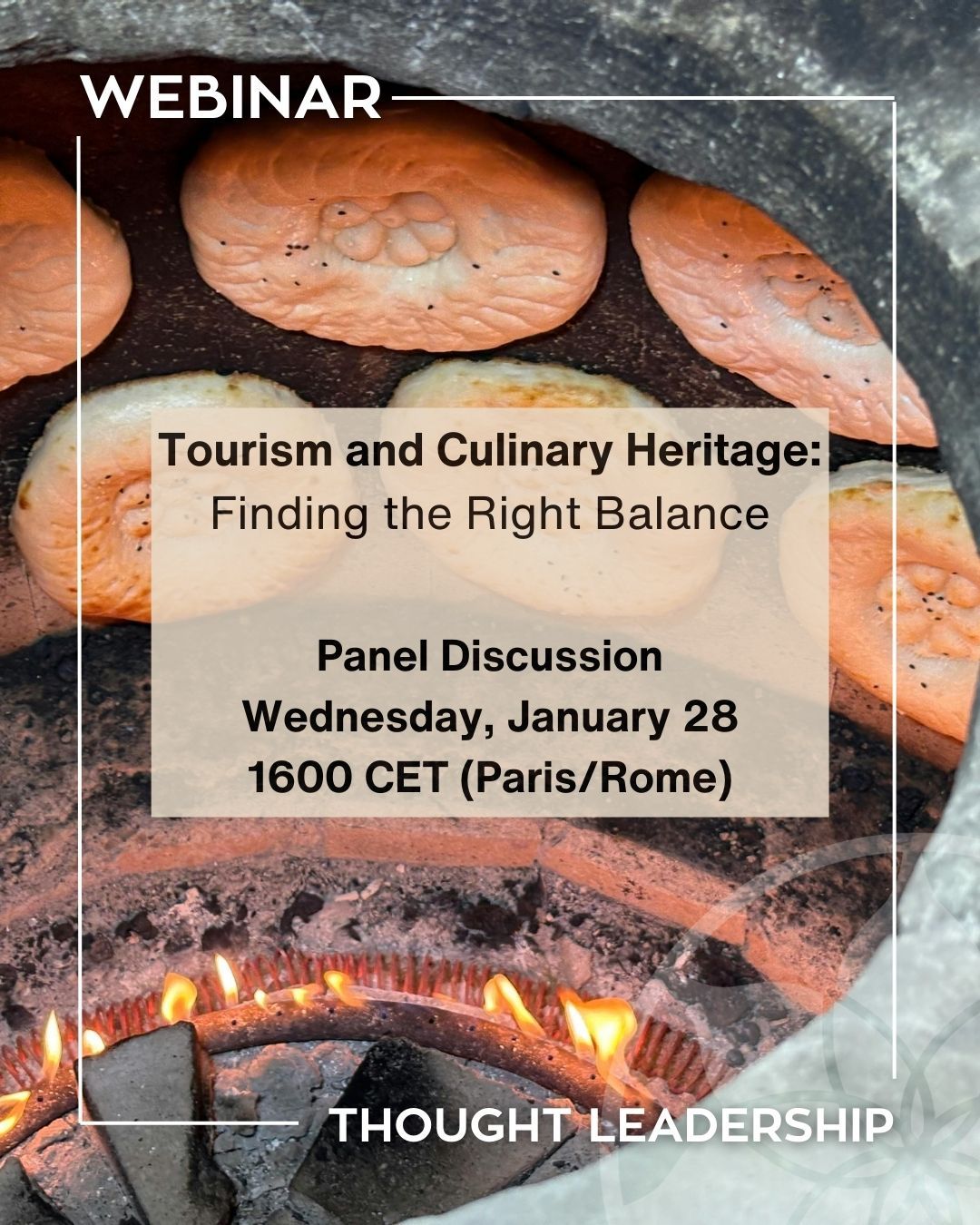
REGISTER NOW As interest in local food cultures continues to grow, destinations face increasingly complex choices. Tourism can support culinary heritage by strengthening local economies and raising awareness of food traditions. At the same time, poorly managed promotion can simplify, commodify, or distort cultural practices. This webinar brings together perspectives from across the system to examine how tourism and culinary heritage can coexist more responsibly. Panelists: - Janice Ruddock, Executive Director, Ontario Craft Brewers Association - Sean O’Rourke, President, Eat & Walkabout Tours - Niclas Fjellström, Executive Director, Culinary Heritage Network - Erik Wolf, Executive Director, World Food Travel Association The discussion will be moderated by Marc Checkley, a Lausanne-based storyteller, journalist, and experienced event host with a background in food, wine, travel, and cultural programming. Topics include: Recognizing culinary heritage as living culture rather than a static product Understanding how tourism and markets influence tradition over time Identifying where destinations most often struggle to find balance Applying practical principles for responsible promotion and stewardship This session is relevant for destination marketers, tourism offices, policymakers, producer associations, educators, and anyone working at the intersection of food, culture, and place. There is no cost to attend. REGISTER NOW
by Erik Wolf 1 January 2026
In 2025, the World Food Travel Association focused on strengthening culinary culture as living heritage, supporting the people and practices that sustain it, and building informed global collaboration rooted in values rather than prestige. Advanced the Taste of Place Movement and Alliance We clarified and communicated the purpose of the Taste of Place Movement — a global effort dedicated to safeguarding culinary heritage and empowering the keepers of food culture in alignment with the Declaration for the Preservation of Culinary Heritage . The Taste of Place Alliance framework was defined to support destinations, organizations, and practitioners who share these values. We also invite those who support this mission to join the Movement through philanthropic contributions. Do you represent a destination? Please contact us to learn how your destination can participate. Delivered Strategic Advisory and Destination Engagement Work We conducted destination-level analysis and advisory engagement in diverse regions, including the Bothnian Bay area of Sweden and Finland and with Saudi Arabia’s Culinary Arts Commission , to help partners explore how food culture, regional identity, and cooperation can contribute to responsible cultural and economic resilience. Updated Professional Training Programs All certification and training programs were updated with current research, terminology, and real-world cases. Regular refresh cycles ensure that practitioners receive instruction that reflects the most accurate and relevant information available. Built Relationships Through Targeted Engagement We engaged directly with destinations, stakeholders, and partners through site visits and industry events, including exploratory meetings in Umbria, Italy and participation in World Travel Market , to listen, assess alignment, and foster partnerships grounded in cultural integrity. Expanded and Recognized Leadership Within Our Global Network In 2025 we welcomed new Ambassadors from diverse regions, including Chef Dela Acolatse ( Ghana ) and Gerald Kock ( Aruba ), and named Mabel Esther Vega Montaño ( Colombia ) as our first Taste of Place Guardian, recognizing her lifelong commitment to ancestral knowledge and rural food culture. These appointments reinforce our values as articulated in the Declaration for the Preservation of Culinary Heritage. Interested in becoming an Ambassador or Guardian in your area? If you share our values and commitment, please get in touch . Honored Outstanding Contributions to the Field We awarded the 2025 Lifetime Achievement Award to Francesc Fusté-Forné (Girona, Spain) in recognition of his distinguished career advancing food tourism research, education, and understanding of culinary culture. We also invited the community to nominate other individuals whose work has made enduring contributions to our field. Provided Global Advocacy Through Editorial and Media Platforms We continued to interpret and elevate global developments in newsletters and digital content, and through the Taste of Place Podcast , which released 11 episodes in 2025 featuring inspiring leaders. Notable episodes included “Peace Through Food” with Paula Mohammed, “The Sweet Taste of Ethics” featuring Veronica Peralta on ethical chocolate, and “From Tunisia With Flavor” with Jamie Furniss on repositioning Tunisian cuisine for travelers. By sharing these conversations, we reinforced food as cultural heritage and connected listeners with makers and culture bearers.
31 December 2025
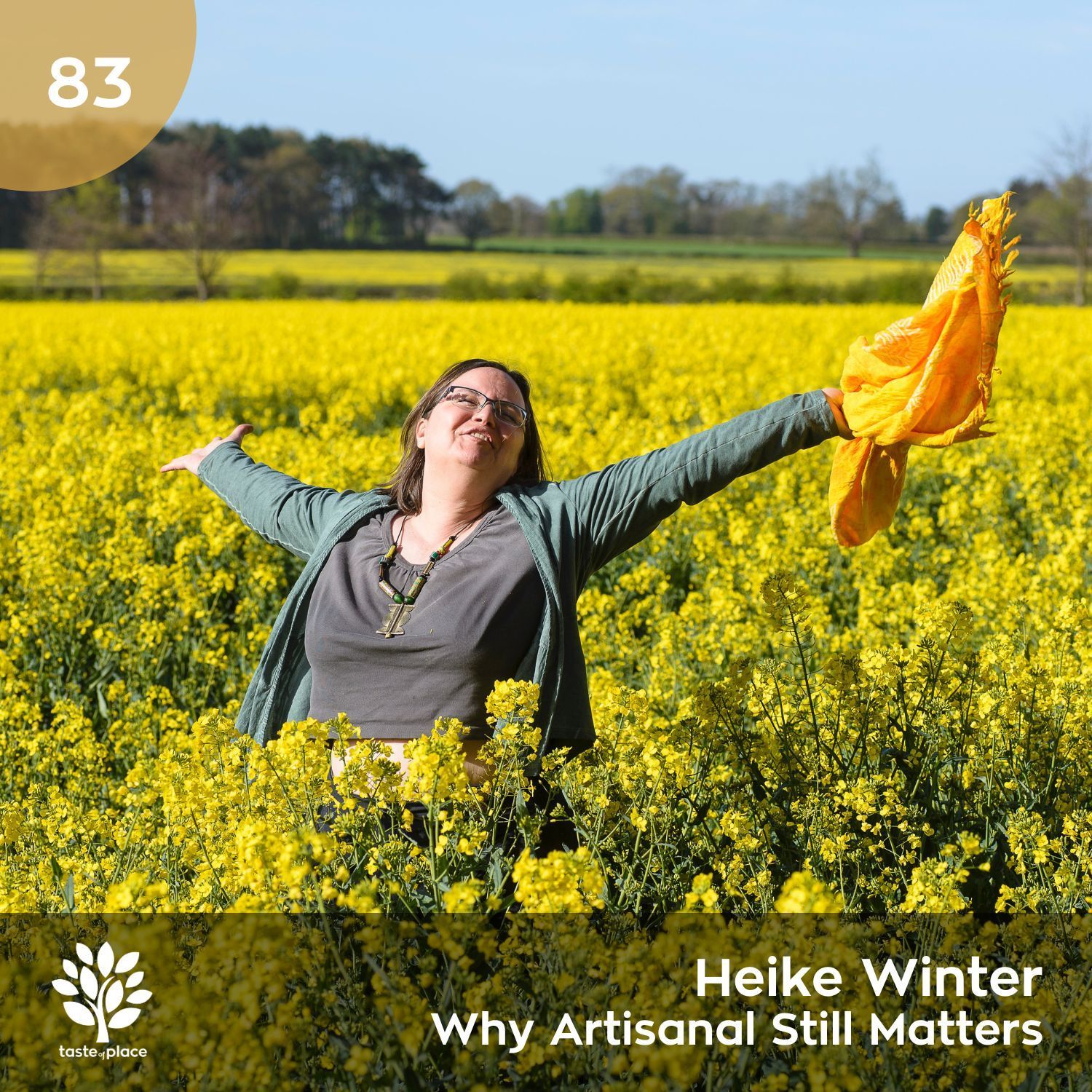
🎧 New Podcast Episode Alert! Episode 83: “Why Artisanal Still Matters” featuring Heike Winter What happens when you completely reinvent your life at 50—and return to the culinary traditions that shaped you? In Episode 82, host Erik Wolf speaks with Daniela Sfara, the Canadian-Italian chef, cultural ambassador, and founder of ITALUS whose mission is to preserve the disappearing regional foodways of Italy. Daniela shares her extraordinary personal transformation from a 20-year jewellery career to becoming a respected voice in culinary culture, hospitality excellence, and immersive food experiences across Italy, Dubai, Europe, and North America. Daniela’s story is one of resilience, reinvention, and deep cultural stewardship. Whether you work in food, tourism, hospitality, or simply love Italian cuisine, this is an inspiring reminder that food is identity, and preserving culinary heritage is an act of service to future generations. 🎙️ Available now on Spotify, iTunes & your favorite podcast platforms (Search for "Taste of Place") 📺 Prefer video? Watch it now on our YouTube channel. Or listen here now:
Road stretching towards the setting sun. Golden sky, open fields.
31 December 2025
ARUBA (Gerald Kock) Savaneta Seafood Festival: A Model for Community-Led Food Touri sm in Aruba The inaugural Savaneta Seafood Festival, held on September 28, 2025, by Fundación Savaneta Prome Capital, marked a significant moment in Aruba’s culinary and cultural calendar. In the island’s first capital, seaside streets were transformed into a pedestrian-only celebration where food, music, and heritage came together as a powerful expression of local identity. Attracting an estimated 6,000 visitors, the festival demonstrated strong demand for authentic, community-driven experiences among both residents and travelers. Central to the event was an “Ocean-to-Plate” revival. Twenty-four local vendors showcased seafood such as snails, conch, shrimp, and lobster, prepared using traditional family recipes and fresh local herbs. The festival also revived a local fishing tournament for the first time in 40 years. Approximately 30 boats and 100 fishermen landed a collective catch of 880 kg, reinforcing the connection between sea, community, and tradition. Part of the catch was donated and grilled on-site by local chefs, allowing visitors to experience the full journey from ocean to plate - a powerful symbol of sustainability, generosity, and shared pride. Beyond gastronomy, the festival elevated local culture and entrepreneurship through art, crafts, and music, positioning Savaneta as a living example of how cultural heritage and economic opportunity can thrive together. From the perspective of Food Tourism Ambassadors for the World Food Travel Association, the festival offers a replicable framework for Aruba’s future: a model in which each district expresses its distinct identity through food, storytelling, and place-based experiences. The Savaneta Seafood Festival stands as proof that culinary heritage can strengthen community resilience and support sustainable tourism. More than a single event, it presents a compelling vision of how small places can achieve meaningful global impact through food.
14 December 2025
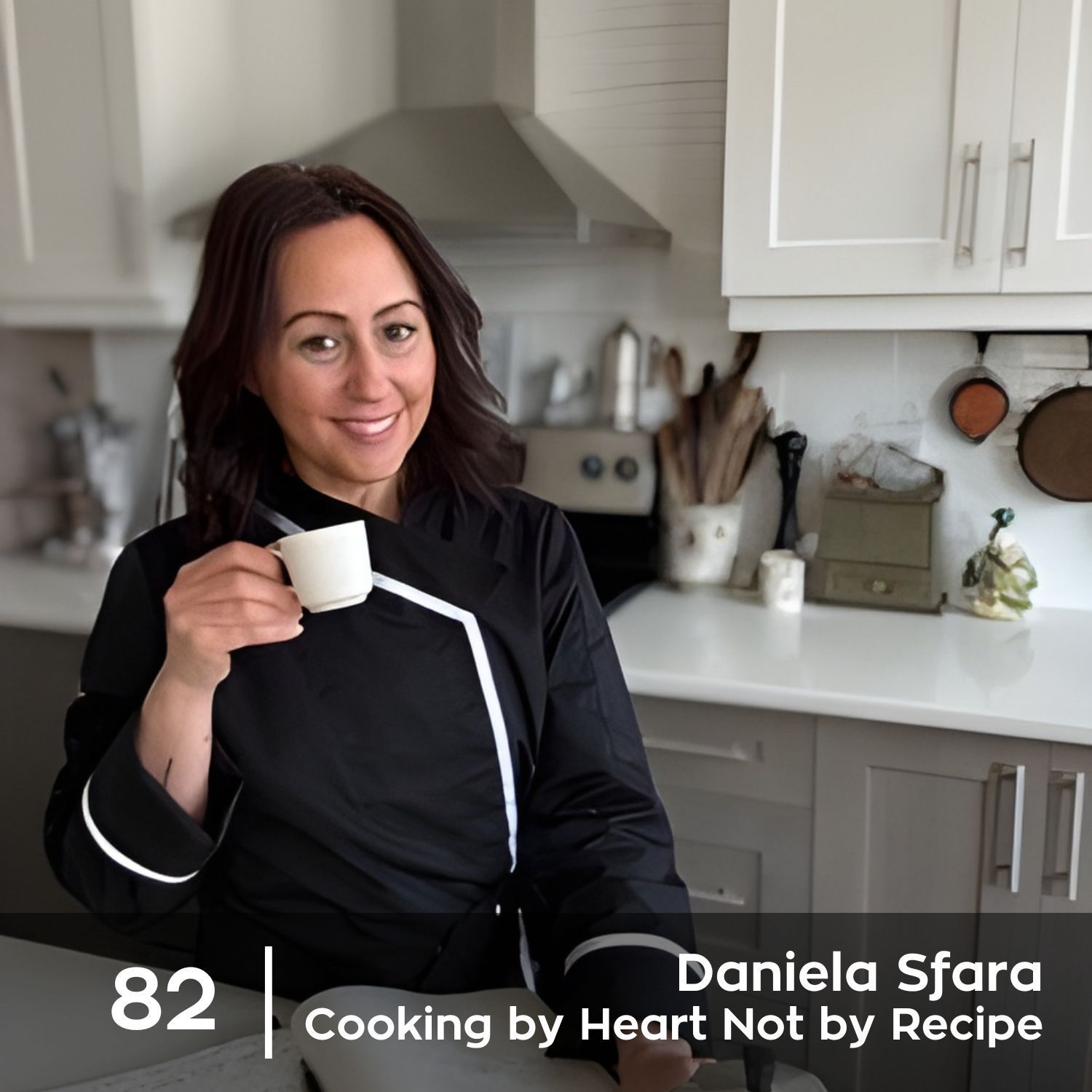
🎧 New Podcast Episode Alert! Episode 82: “Cooking by Heart, Not by Recipe” featuring Daniela Sfara What happens when you completely reinvent your life at 50—and return to the culinary traditions that shaped you? In Episode 82, host Erik Wolf speaks with Daniela Sfara, the Canadian-Italian chef, cultural ambassador, and founder of ITALUS whose mission is to preserve the disappearing regional foodways of Italy. Daniela shares her extraordinary personal transformation from a 20-year jewellery career to becoming a respected voice in culinary culture, hospitality excellence, and immersive food experiences across Italy, Dubai, Europe, and North America. Daniela’s story is one of resilience, reinvention, and deep cultural stewardship. Whether you work in food, tourism, hospitality, or simply love Italian cuisine, this is an inspiring reminder that food is identity, and preserving culinary heritage is an act of service to future generations. 🎙️ Available now on Spotify, iTunes & your favorite podcast platforms (Search for "Taste of Place") 📺 Prefer video? Watch it now on our YouTube channel. Or listen here now:
More posts