Cos’è il gusto? Un punto di vista italiano.
6 January 2021
Il gusto italiano

Ascolto una delle ultime composizioni di Ludovico Einaudi e penso. Non c’è un filo conduttore ben preciso nei miei pensieri, semplicemente la sua musica mi trasporta lontano, via da questa sala universitaria piena di libri ma svuotata della sua essenza: la condivisione del tempo in cui anche solo uno scambio d’occhiate può farti sentire vivo e presente. Il distanziamento sociale non fa per noi.

La musica mi distoglie l’attenzione e mi fa guardare l’orizzonte, meravigliandomi delle sfumature dei vari colori che nel corso della giornata cambiano per svanire ogni giorno, dopo il tramonto, nell’infinito. Spesso mi soffermo a riflettere sul significato di questa non visione perché realmente non so cosa c’è aldilà, ma sono curioso di natura e posso solo immaginare una realtà futura in questi posti nuovi. Ed è qui, in un attimo di lucidità, che ritrovo il bandolo della matassa: cos’è che realmente cerchi? Cos’è che ti spinge ad andare avanti? Cos’è che ti contraddistingue come persona? Nel mio caso una irrefrenabile voglia di viaggiare e conoscere nuove culture, nuove persone, nuove forme di espressione. Soprattutto quella innata voglia di scoprire come la gente di un determinato territorio si esprime attraverso la loro forma di cucinare, di mangiare e cura nella produzione di prodotti alimentari tipici del luogo. Un altra cosa amo fare: immaginare come i vari paesaggi e i suoi alimenti possano mescolarsi per la creazione di nuovi piatti. Per esempio vivo in una casa sopra il fiume Onyar di Girona e vedo carpe, alghe, foglie e fiori di tilla, ma anche tanta acqua scorrere via verso il mare. A voi la grande impresa di creare una nuova ricetta!

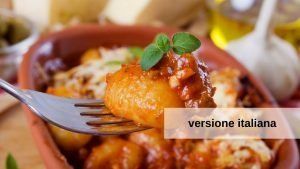
Ma non vi voglio parlare di innovazione culinaria. Invece, tornare a ciò che le note pausate della composizione “Seven days walking” provocano e adesso un contrastante sentimento mi attanaglia: la nostalgia. A volte succede che un subbuglio di emozioni ti renda triste, melanconico e avvilito, con una gran voglia di tornare nei luoghi passati per ritrovare quella speranza, passione e più semplicemente quel qualcosa di conosciuto che ti faccia sentire e stare bene. Ci sono varie forme per sconfiggere o per lo meno convivere con la nostalgia e una di queste è il senso di appartenenza ad una comunità. Infatti la prima cosa che ho fatto è stato cercare il luogo di nascita di Einaudi e, come sospettavo, anche lui è piemontese come me. Non lo conosco di persona, non so neanche dove sia adesso, ma mi metto subito a camminare insieme a lui nel bel mezzo delle colline delle Langhe, nei sentieri di montagna, tra i laghi e la mia città di Ivrea. Mi sento subito meglio, riesco a fare mezzo sorriso e dopo tanto tempo seduto con quel groppone nello stomaco mi rendo conto di non aver mangiato. Forse è proprio questa sensazione di fame il  motivo principale della mia nostalgia ma non voglio perdere subito quel senso di rinnovata felicità bensì ampliarla trovando altre informazioni che possano far mangiare con gli occhi e saziare la voglia di Italia. Continuo la  ricerca Google e trovo un bella intervista sul The Guardian che racconta di una abitudine culinaria di infanzia del mio nuovo amico immaginario. Qualcosa di estremamente semplice che ci accomuna, perché anche io tornando a casa sentivo quel profumo delizioso di burro bruciacchiato e salvia. Nel mio caso era il segnale inconfondibile che la nonna aveva fatto gli gnocchi.

Smetto di sognare e con l’acquolina in bocca mi sbrigo a spiegarvi cosa sono gli gnocchi e cosa rappresentano per la cucina italiana. Prima di tutto mi piace giocare con l’etimologia delle parole perché ci si trova tutta l’evoluzione dell’uomo e l’adozione di determinati aspetti della vita quotidiana nella lingua di un determinato posto. Nel caso degli gnocchi tutto viene dalla similitudine delle nocche delle dita con le strisce di pasta da cui si ricavano le palline di pasta. In tutta Italia ci saranno mille modi per definire questa pietanza. Ci sono quelli romani, quelli sardi, i canederli trentini, quelli fritti emiliani, i dolci siciliani, rigati o lisci…insomma chi più ne ha ne metta. I più famosi però sono senza dubbio gli gnocchi di patate e la loro storia risale alla fine del Settecento quando alla fine di una carestia si aggiunse la patata nelle ricette del pane o della pasta ( https://www.gamberorosso.it/notizie/storia-degli-gnocchi-di-patate/ ). Ed è proprio questa aggiunta a ciò che si definiva gnocco all’acqua o gnocco bignè e altre piccole trasformazioni che dopo oltre un secolo possiamo ritrovare una ricetta simile a quella odierna, ovvero la preparazione di palline fatte da un impasto di patate bollite, uova, sale e pochissima farina. Il processo è abbastanza laborioso ma sicuramente la parte più difficile è trovare la patata giusta: farinosa e senza tanta acqua. Più umida è la patata e più farina dovremo usare per far si che l’impasto rimanga compatto, ma soprattutto distogliendo il nostro palato da ciò che è il sapore principale del tubero. Sicuramente è questa la più grande caratteristica del gusto italiano: la ricerca della qualità del prodotto ed esaltarne il suo sapore naturale senza tante confusioni. Certe certezze nella vita sono basilari.

Infine c’è ancora spazio per un’ultima riflessione. Riguarda il nostro modus vivendi, secondo una visione occidentale privilegiata, perché sebbene questa pandemia abbia ridimensionato l’approccio alla quotidianità e l’impossibilità momentanea di viaggiare con serenità e spensieratezza, possiamo ancora permetterci di mettere un piatto in tavola e molto spesso soddisfando la nostra immaginazione. Noi che lavoriamo nel mondo della gastronomia siamo fortunati e per questo che dobbiamo essere consapevoli che è necessaria una collaborazione per eliminare la fame nel mondo. Non voglio essere naive o disilluso ma è chiara la necessità di attuare adesso per un mondo migliore. Conoscere le tradizioni culinarie, sapere del loro passato e di come abbiamo adattato le nostre pietanze per resistere a l’inclemenza della natura, al giorno d’oggi umana, ci deve dare la forza necessaria per imparare ad affrontare le nuove sfide che ci aspettano, consapevoli che ognuno di noi può e deve fare la differenza. Questo ultimo pensiero vuole essere uno slancio alla partecipazione congiunta di tutti gli attori gastronomici per riunirsi attorno ad un mercato, quello turistico, che aiuta ad avvicinare piuttosto che dividere, infrangere le paure e creare quel “hummus” (andate a vedere l’etimologia della parola, perchè adesso ho proprio tanta fame) per far rinascere la voglia di stare insieme e condividere l’ospitalità per eccellenza. In Italia come in tanti altri paesi del mondo si dimostra aggiungendo un posto a tavola per passarci delle ore intere: questo è il vero gusto.

Scritto da Massimo Bonmassari. A cura di Erik Wolf.
Promotion for culinary capitals an innovative destination certification and development program for unknown destinations
Taste of place podcast listen to our culinary travel and culture podcast with erik wolf
Food
A membership page with a picture of pancakes on a plate.
11 January 2026
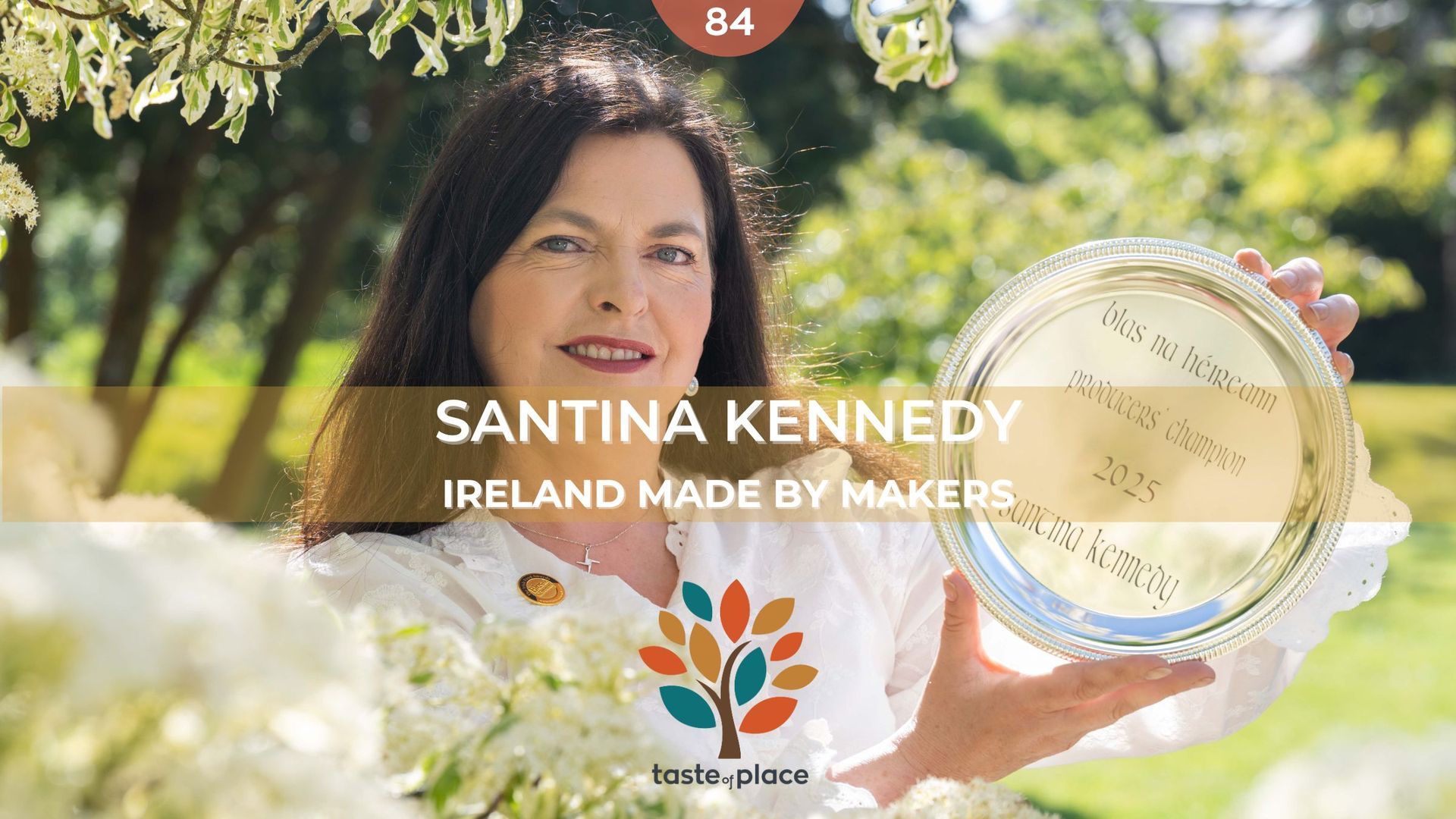
In this episode, Erik Wolf speaks with Santina Kennedy, an award-winning Irish food consultant, producer champion, and storyteller whose work bridges food history, culture, and contemporary experience design. Santina shares her unconventional journey from banking to café ownership, and ultimately to a vocation that did not exist when she was young: interpreting Irish food culture through storytelling, events, and strategic collaborations. She reflects candidly on delayed purpose, entrepreneurship without capital, and why genuine hospitality matters more than polish or scale. The conversation explores Ireland’s overlooked food narratives - from tenant farmers and kitchen workers to everyday staples like potatoes, butter, and bread - and how these stories can be brought to life through immersive experiences in galleries, estates, and public institutions. Santina also dives deeply into Irish whiskey, explaining how history, resilience, terroir, and innovation are expressed in mash bills, grains, and pairing traditions. A standout theme is Santina’s advocacy for St. Brigid as Ireland’s original food and hospitality patron, and her work elevating Brigid’s legacy through food, drink, poetry, and craft. The episode concludes with a thoughtful discussion on regional food networks, particularly County Wicklow, and why Ireland must first teach its own people to value their food culture before expecting visitors to understand it. This is a rich, reflective conversation about identity, resilience, and the power of food to tell the true story of a place. You can learn more about Santina here . The Taste of Place podcast is sponsored by the World Food Travel Association’s Taste of Place movement. Taste of Place is a global initiative that celebrates culinary culture, food heritage, and the makers behind them. Through the movement, travelers and consumers are encouraged to connect more deeply with destinations and products through their unique flavors and traditions. Learn more at JoinTasteofPlace.org . 🎙️ Available now on Spotify, iTunes & your favorite podcast platforms (Search for "Taste of Place") 📺 Prefer video? Watch it now on our YouTube channel . Or listen here now:
5 January 2026
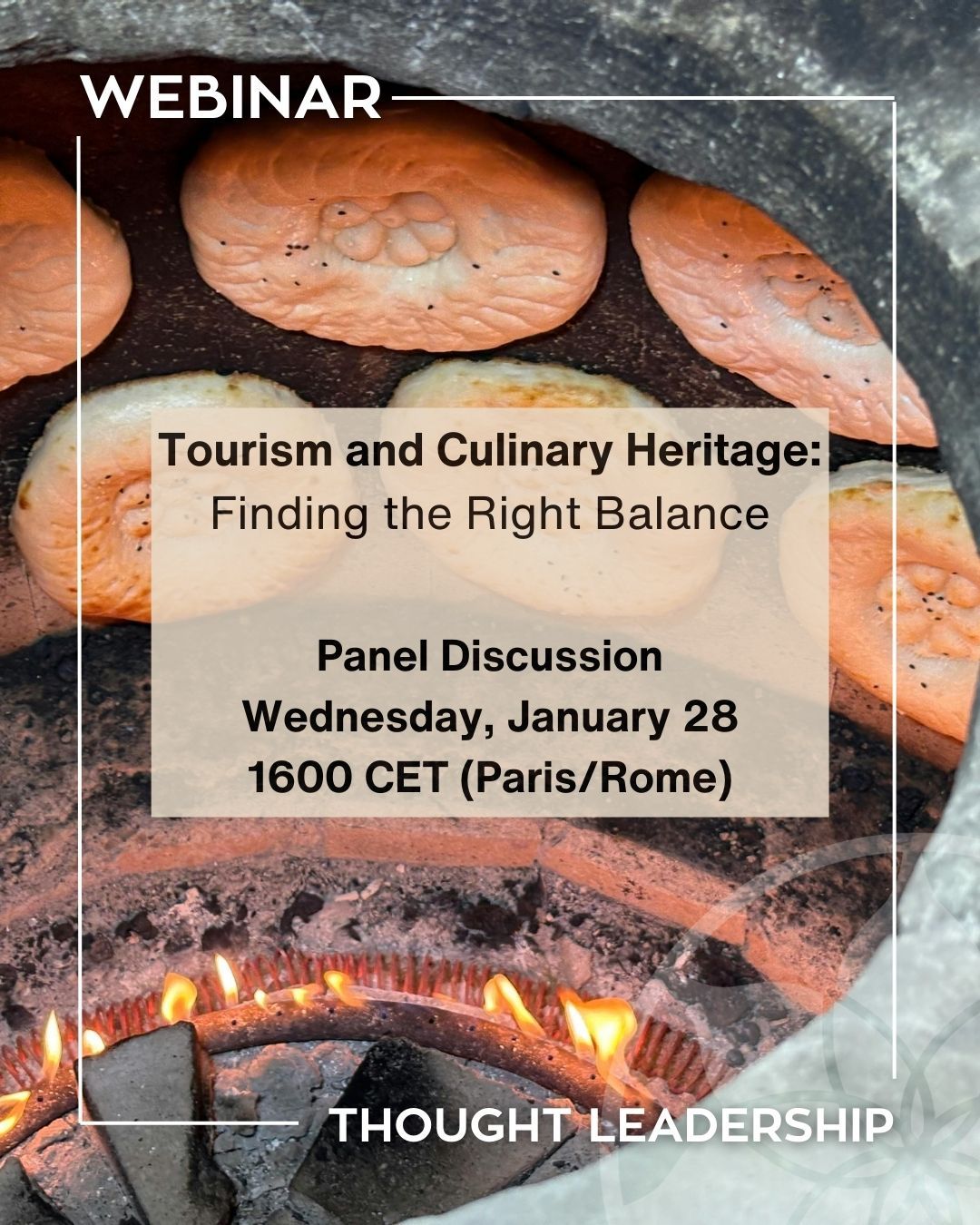
REGISTER NOW As interest in local food cultures continues to grow, destinations face increasingly complex choices. Tourism can support culinary heritage by strengthening local economies and raising awareness of food traditions. At the same time, poorly managed promotion can simplify, commodify, or distort cultural practices. This webinar brings together perspectives from across the system to examine how tourism and culinary heritage can coexist more responsibly. Panelists: - Janice Ruddock, Executive Director, Ontario Craft Brewers Association - Sean O’Rourke, President, Eat & Walkabout Tours - Niclas Fjellström, Executive Director, Culinary Heritage Network - Erik Wolf, Executive Director, World Food Travel Association The discussion will be moderated by Marc Checkley, a Lausanne-based storyteller, journalist, and experienced event host with a background in food, wine, travel, and cultural programming. Topics include: Recognizing culinary heritage as living culture rather than a static product Understanding how tourism and markets influence tradition over time Identifying where destinations most often struggle to find balance Applying practical principles for responsible promotion and stewardship This session is relevant for destination marketers, tourism offices, policymakers, producer associations, educators, and anyone working at the intersection of food, culture, and place. There is no cost to attend. REGISTER NOW
by Erik Wolf 1 January 2026
In 2025, the World Food Travel Association focused on strengthening culinary culture as living heritage, supporting the people and practices that sustain it, and building informed global collaboration rooted in values rather than prestige. Advanced the Taste of Place Movement and Alliance We clarified and communicated the purpose of the Taste of Place Movement — a global effort dedicated to safeguarding culinary heritage and empowering the keepers of food culture in alignment with the Declaration for the Preservation of Culinary Heritage . The Taste of Place Alliance framework was defined to support destinations, organizations, and practitioners who share these values. We also invite those who support this mission to join the Movement through philanthropic contributions. Do you represent a destination? Please contact us to learn how your destination can participate. Delivered Strategic Advisory and Destination Engagement Work We conducted destination-level analysis and advisory engagement in diverse regions, including the Bothnian Bay area of Sweden and Finland and with Saudi Arabia’s Culinary Arts Commission , to help partners explore how food culture, regional identity, and cooperation can contribute to responsible cultural and economic resilience. Updated Professional Training Programs All certification and training programs were updated with current research, terminology, and real-world cases. Regular refresh cycles ensure that practitioners receive instruction that reflects the most accurate and relevant information available. Built Relationships Through Targeted Engagement We engaged directly with destinations, stakeholders, and partners through site visits and industry events, including exploratory meetings in Umbria, Italy and participation in World Travel Market , to listen, assess alignment, and foster partnerships grounded in cultural integrity. Expanded and Recognized Leadership Within Our Global Network In 2025 we welcomed new Ambassadors from diverse regions, including Chef Dela Acolatse ( Ghana ) and Gerald Kock ( Aruba ), and named Mabel Esther Vega Montaño ( Colombia ) as our first Taste of Place Guardian, recognizing her lifelong commitment to ancestral knowledge and rural food culture. These appointments reinforce our values as articulated in the Declaration for the Preservation of Culinary Heritage. Interested in becoming an Ambassador or Guardian in your area? If you share our values and commitment, please get in touch . Honored Outstanding Contributions to the Field We awarded the 2025 Lifetime Achievement Award to Francesc Fusté-Forné (Girona, Spain) in recognition of his distinguished career advancing food tourism research, education, and understanding of culinary culture. We also invited the community to nominate other individuals whose work has made enduring contributions to our field. Provided Global Advocacy Through Editorial and Media Platforms We continued to interpret and elevate global developments in newsletters and digital content, and through the Taste of Place Podcast , which released 11 episodes in 2025 featuring inspiring leaders. Notable episodes included “Peace Through Food” with Paula Mohammed, “The Sweet Taste of Ethics” featuring Veronica Peralta on ethical chocolate, and “From Tunisia With Flavor” with Jamie Furniss on repositioning Tunisian cuisine for travelers. By sharing these conversations, we reinforced food as cultural heritage and connected listeners with makers and culture bearers.
31 December 2025
🎧 New Podcast Episode Alert! Episode 83: “Why Artisanal Still Matters” featuring Heike Winter What happens when you completely reinvent your life at 50—and return to the culinary traditions that shaped you? In Episode 82, host Erik Wolf speaks with Daniela Sfara, the Canadian-Italian chef, cultural ambassador, and founder of ITALUS whose mission is to preserve the disappearing regional foodways of Italy. Daniela shares her extraordinary personal transformation from a 20-year jewellery career to becoming a respected voice in culinary culture, hospitality excellence, and immersive food experiences across Italy, Dubai, Europe, and North America. Daniela’s story is one of resilience, reinvention, and deep cultural stewardship. Whether you work in food, tourism, hospitality, or simply love Italian cuisine, this is an inspiring reminder that food is identity, and preserving culinary heritage is an act of service to future generations. 🎙️ Available now on Spotify, iTunes & your favorite podcast platforms (Search for "Taste of Place") 📺 Prefer video? Watch it now on our YouTube channel. Or listen here now:
Road stretching towards the setting sun. Golden sky, open fields.
31 December 2025
ARUBA (Gerald Kock) Savaneta Seafood Festival: A Model for Community-Led Food Touri sm in Aruba The inaugural Savaneta Seafood Festival, held on September 28, 2025, by Fundación Savaneta Prome Capital, marked a significant moment in Aruba’s culinary and cultural calendar. In the island’s first capital, seaside streets were transformed into a pedestrian-only celebration where food, music, and heritage came together as a powerful expression of local identity. Attracting an estimated 6,000 visitors, the festival demonstrated strong demand for authentic, community-driven experiences among both residents and travelers. Central to the event was an “Ocean-to-Plate” revival. Twenty-four local vendors showcased seafood such as snails, conch, shrimp, and lobster, prepared using traditional family recipes and fresh local herbs. The festival also revived a local fishing tournament for the first time in 40 years. Approximately 30 boats and 100 fishermen landed a collective catch of 880 kg, reinforcing the connection between sea, community, and tradition. Part of the catch was donated and grilled on-site by local chefs, allowing visitors to experience the full journey from ocean to plate - a powerful symbol of sustainability, generosity, and shared pride. Beyond gastronomy, the festival elevated local culture and entrepreneurship through art, crafts, and music, positioning Savaneta as a living example of how cultural heritage and economic opportunity can thrive together. From the perspective of Food Tourism Ambassadors for the World Food Travel Association, the festival offers a replicable framework for Aruba’s future: a model in which each district expresses its distinct identity through food, storytelling, and place-based experiences. The Savaneta Seafood Festival stands as proof that culinary heritage can strengthen community resilience and support sustainable tourism. More than a single event, it presents a compelling vision of how small places can achieve meaningful global impact through food.
14 December 2025
🎧 New Podcast Episode Alert! Episode 82: “Cooking by Heart, Not by Recipe” featuring Daniela Sfara What happens when you completely reinvent your life at 50—and return to the culinary traditions that shaped you? In Episode 82, host Erik Wolf speaks with Daniela Sfara, the Canadian-Italian chef, cultural ambassador, and founder of ITALUS whose mission is to preserve the disappearing regional foodways of Italy. Daniela shares her extraordinary personal transformation from a 20-year jewellery career to becoming a respected voice in culinary culture, hospitality excellence, and immersive food experiences across Italy, Dubai, Europe, and North America. Daniela’s story is one of resilience, reinvention, and deep cultural stewardship. Whether you work in food, tourism, hospitality, or simply love Italian cuisine, this is an inspiring reminder that food is identity, and preserving culinary heritage is an act of service to future generations. 🎙️ Available now on Spotify, iTunes & your favorite podcast platforms (Search for "Taste of Place") 📺 Prefer video? Watch it now on our YouTube channel. Or listen here now:
More posts