Food Friendly Wines

17 January 2021
wine

Some wines more than others are “food-friendly.” It’s about time to give them the place they deserve.

The number of wine lovers has grown rapidly in recent years. There are plenty of wine fanatics, but even if you are not one of them, or if you happen to drink a glass of wine only every so often, you still probably have one or two grape varietals that you really love. And you probably know a thing or two about those same varietals, maybe even some historic facts.

There is a wide variety of wines available, each with different characteristics and special flavors. Wine is widely accepted around the world, with millions of bottles being opened for wine tastings to share their taste with those who want to enjoy a glass of wine, sometimes for the first time.

Wine may be a glamorous protagonist in the world-wide consumers’ theater, but have we forgotten one of its key roles in this glamorous show? What I mean is that for thousands of years now, we have been drinking wine while enjoying our food. A great role of wine was, is, and will continue to be, the accompaniment of our food. Yet many of today’s wines are not intended to accompany food, but rather are designed to provide an independent experience and satisfaction to the taster.

This fact makes sense since, as we said, wine is extremely popular and therefore has taken a prominent place among the products that consumers love. Therefore one could say that the role of wine is often one step ahead of the role of food, which explains why many wine-related experiences do not always involve food.

Wines have accompanied food ever since ancient times. In recent years, more and more people are rediscovering this great role of wine and researching which wines are suitable to accompany their daily meal, a formal dinner, a family gathering, or a special event.

The wine producers themselves are noticing this renaissance in wine interest. Winemakers all around the world are making wines that can add a special note to food, and some of them are even causing us to rethink our daily diet. We’re not talking about drinking to excess, but according to experts, drinking a small amount of wine daily can benefit our health.

When chosen wisely in relation to food, wine can emphasize the flavors of foods, and maximize our sensory delights. Think of it this way. In the piano of taste, wine and food are each different keys. And when the pianist plays the keys with his or her knowledge, then the whole gastronomic experience becomes a harmonious melody.

But are all wines food-friendly? Experts tell us that some wines that are very friendly to some foods, and others are not so much. The main idea behind wine and food pairing is that specific elements such as texture and taste, both in food and wine, actually interact with each other. Therefore when we find the right combination of these elements, our overall experience of taste and will be that much more enjoyable.

The acidity of wine seems to play an important role in whether a wine will be classified as food-friendly. Also, a wine’s specific alcohol content seems to play a big role in this too. The taste, texture, and aroma of the wine all have an impact. Of course, whether a wine is food-friendly really depends on the consumer himself. Although millions of pages have been written about which wine suits specific foods, we love what we love. And we will choose to accompany our meals with a specific type of wine, e.g., only white or only red wine, or a specific varietal, like chardonnay or cabernet.

I’m not trying to tell you which wine should be paired with which foods, but wine can be considered as a constant companion to food. Many people are accustomed to drinking wine as an aperitif, or as their main beverage, but this does not mean that we should forget that wine can be one of the most important factors in the enjoyment of our food – if it is chosen correctly.

Of course, this does not reduce the value of wine as a standalone product. On the contrary, by allowing it to accompany our food, we make it a place for it in our daily diet, and in fact, recognize it as a key factor in what we add to our personal diets.

In recent years, wine producers increasingly recognized that wine must find its rightful place in the daily diet. That is why they have turned to their focus to produce more food-friendly wines. Just look at wine labels today. More and more of them make the “food-friendly” claim. And so the wineries increase their customer base, and of course, profit as well. Wine – and everything about it, from its production to promotion- has been one of the most profitable industries in many countries of the world, for a long time. And the trend is only increasing!

Now is the time to rethink the role of wine in your own diet! It may be much bigger than you think!

Author: Maria Athanasopoulou is the founder of Respond on Demand Ltd and chair of the Board of Directors of the World Food Travel Association (WFTA). She serves as WFTA’s Certified Ambassador to Greece and is also a Master of Arts in Culinary Travel.


Promotion for culinary capitals an innovative destination certification and development program for unknown destinations
Taste of place podcast listen to our culinary travel and culture podcast with erik wolf
Food
A membership page with a picture of pancakes on a plate.
5 January 2026
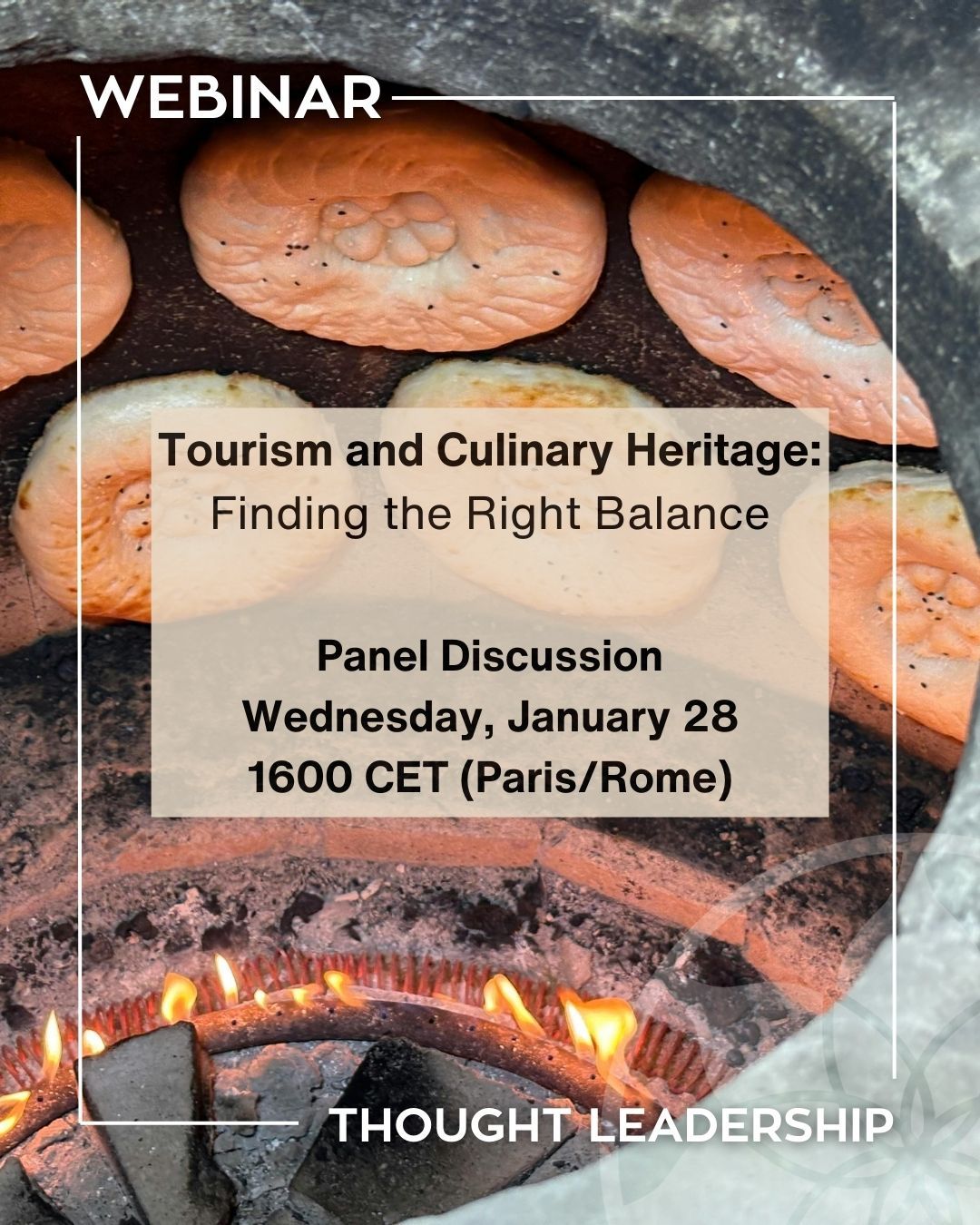
As interest in local food cultures continues to grow, destinations face increasingly complex choices. Tourism can support culinary heritage by strengthening local economies and raising awareness of food traditions. At the same time, poorly managed promotion can simplify, commodify, or distort cultural practices. This webinar brings together perspectives from across the system to examine how tourism and culinary heritage can coexist more responsibly. Panelists: - Janice Ruddock, Executive Director, Ontario Craft Brewers Association - Sean O’Rourke, President, Eat & Walkabout Tours - Niclas Fjellström, Executive Director, Culinary Heritage Network - Erik Wolf, Executive Director, World Food Travel Association The discussion will be moderated by Marc Checkley, a Lausanne-based storyteller, journalist, and experienced event host with a background in food, wine, travel, and cultural programming. Topics include: Recognizing culinary heritage as living culture rather than a static product Understanding how tourism and markets influence tradition over time Identifying where destinations most often struggle to find balance Applying practical principles for responsible promotion and stewardship This session is relevant for destination marketers, tourism offices, policymakers, producer associations, educators, and anyone working at the intersection of food, culture, and place. There is no cost to attend. REGISTER NOW
2 January 2026
🎧 New Podcast Episode Alert! Episode 83: “Why Artisanal Still Matters” featuring Heike Winter What happens when you completely reinvent your life at 50—and return to the culinary traditions that shaped you? In Episode 82, host Erik Wolf speaks with Daniela Sfara, the Canadian-Italian chef, cultural ambassador, and founder of ITALUS whose mission is to preserve the disappearing regional foodways of Italy. Daniela shares her extraordinary personal transformation from a 20-year jewellery career to becoming a respected voice in culinary culture, hospitality excellence, and immersive food experiences across Italy, Dubai, Europe, and North America. Daniela’s story is one of resilience, reinvention, and deep cultural stewardship. Whether you work in food, tourism, hospitality, or simply love Italian cuisine, this is an inspiring reminder that food is identity, and preserving culinary heritage is an act of service to future generations. 🎙️ Available now on Spotify, iTunes & your favorite podcast platforms (Search for "Taste of Place") 📺 Prefer video? Watch it now on our YouTube channel. Or listen here now:
14 December 2025
🎧 New Podcast Episode Alert! Episode 82: “Cooking by Heart, Not by Recipe” featuring Daniela Sfara What happens when you completely reinvent your life at 50—and return to the culinary traditions that shaped you? In Episode 82, host Erik Wolf speaks with Daniela Sfara, the Canadian-Italian chef, cultural ambassador, and founder of ITALUS whose mission is to preserve the disappearing regional foodways of Italy. Daniela shares her extraordinary personal transformation from a 20-year jewellery career to becoming a respected voice in culinary culture, hospitality excellence, and immersive food experiences across Italy, Dubai, Europe, and North America. Daniela’s story is one of resilience, reinvention, and deep cultural stewardship. Whether you work in food, tourism, hospitality, or simply love Italian cuisine, this is an inspiring reminder that food is identity, and preserving culinary heritage is an act of service to future generations. 🎙️ Available now on Spotify, iTunes & your favorite podcast platforms (Search for "Taste of Place") 📺 Prefer video? Watch it now on our YouTube channel. Or listen here now:
21 November 2025
Born in Las Raíces, San Juan del Cesar, Colombia, Mabel Esther Vega Montaño honors with her life the name of the place where she was born. A rural teacher and guardian of traditions, she combines formal education with the transmission of ancestral knowledge about respectful cultivation and harvesting of the land. Through fique weaving, she connects communities and promotes rural tourism intertwined with local gastronomy, where the wooden pestle, the totumo achiotero, and the wood-fired stove accompany the preparation of traditional dishes that celebrate the living memory and deep roots of the territory to which she has devoted her life. Learn more about our new Taste of Place Movement and how you can support it and the work done by Mabel and others like her.
12 November 2025
🎧 New Podcast Episode Alert! Episode 81: “The Sweet Taste of Ethics” featuring Veronica Peralta In this inspiring episode, Erik Wolf sits down with Veronica Peralta of Paccari Chocolate — the Ecuadorian brand that redefined how ethical, organic, and biodynamic chocolate can uplift entire farming communities. Veronica shares how her brother Santiago transformed Ecuador’s cacao industry by empowering small farmers, protecting biodiversity, and restoring national pride in fine-flavor cacao. The conversation explores the distinct regional flavors of Ecuadorian chocolate, the social and environmental mission behind Paccari, and how climate change is reshaping the global cacao market. Veronica also discusses Paccari’s recognition as the world’s most ethical chocolate brand, and why conscious consumer choices can create real change. 🎙️ Available now on Spotify, iTunes & your favorite podcast platforms (Search for "Taste of Place") 📺 Prefer video? Watch it now on our YouTube channel. Or listen here now:
30 September 2025
In Loving Memory and with Deep Gratitude: Honoring Brian F. Lorge
More posts